Three Gloucester Residents. Three Historic Communities.
Funded by Voices Gloucester and facilitated by Dialect Writers CIC, ‘The Time Is Now’ is a unique community heritage project that captures, for the historical record, some of the volunteers and community workers in Gloucester who have worked tirelessly to support others in recent years.
Though modern, these images draw on the traditions of Tudor portraiture, with an emphasis on luxury and symbolism - playing with our ideas about status and the value of care.
These are not just pictures of individuals - each image has been co-created with the subject and the Gloucestershire Archives. They aim to represent Gloucester’s unique history, catch an exciting moment in time right now, and represent the real people of this city for future generations.
In the historical record, portraits of the wealthy and landowning are easy to find. They showcase the power and influence of the subject, showing their success as being only about their skill as an individual. They conceal the work of those who laboured for them, often in poor conditions. They perpetuated the idea of a ‘natural’ social hierarchy, rooted in a particular version of history. These kinds of portraits still dominate our understanding of the past, and therefore our ideas about identity in the present.
Evidence of other histories; the stories of working class, migrant and marginalised communities can be found in folk tales, legends and ballads. But the real people – what they looked like, where and what was important to them, who their people were, how they liked to have fun - are largely absent from the visual historical record. This project aims to help change that.
Rich in symbolism and powerful imagery, full of our stories of place and identity, the portraits are also accompanied by a series of short films created by local film-maker Katherine Glynne-Jones.
This project seeks to show what happens when communities can tell their own story, in a way that will be visible for future generations. It shows what both our history and our future can look like, when we create it for ourselves.
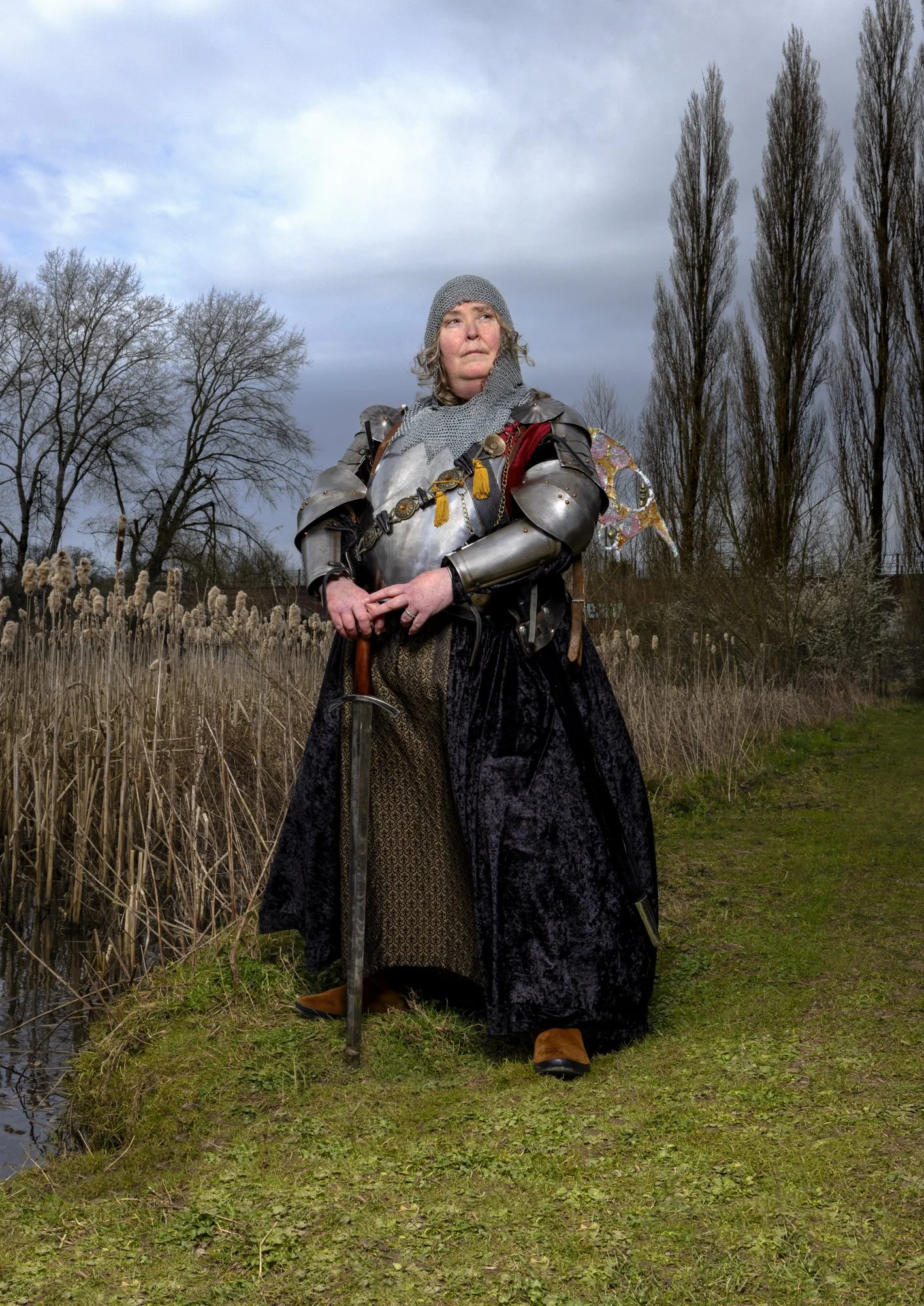
Katrina Mcgonagle
Member of the Westgate Street community, Gloucester
Qualified therapeutic counsellor & Community Producer for Strike A Light CIC
Photographed at Gloucester Boating Lake, Westgate Park
“That’s who I am, personally. I can be a bit of a fairy, and I like that side of me, I really do... We can lose that [fantasy] side from life because we’re adults and working and things are so serious… I like to embrace it and keep it as much as I can.”
During the pandemic, Katrina was part of a network that provided practical and emotional support to residents. As a Community Producer for the arts and heritage CIC Strike A Light, she led the establishment of a Westgate residents group and organised a large-scale folk-based community event, empowering people through art, empathy, and compassion. She is now working on a project based at the Folk of Gloucester (a folk community hub), connecting the residents of Westgate with Strike a Light CIC and providing food for the community.
In this image, Katrina combines her love of Gloucester’s history - in particular, its powerful women such as the 10th-century Queen Aethelflaed (also known as the Lady of the Mercians) - with an exploration of her own Irish heritage and personal history.
She is wearing armour donated by the Folk to reflect the steeliness shown by the people of Gloucester during challenging times over many centuries.
It has often been women who have carried the burden of care for others and fought for change in ways that haven’t been recognised or celebrated officially. Katrina has represented this by bringing both strength and gentleness to the image.
Her armour and sword are balanced by a pair of delicate wings, hand-made by her friends, Tink and Bronte Voice.
This faerie imagery is a nod to Queen Mab, a powerful figure in both Irish and English mythological traditions. Shakespeare described her as the ‘fairy’s midwife’, assisting with the birth of dreams and visions of the future.
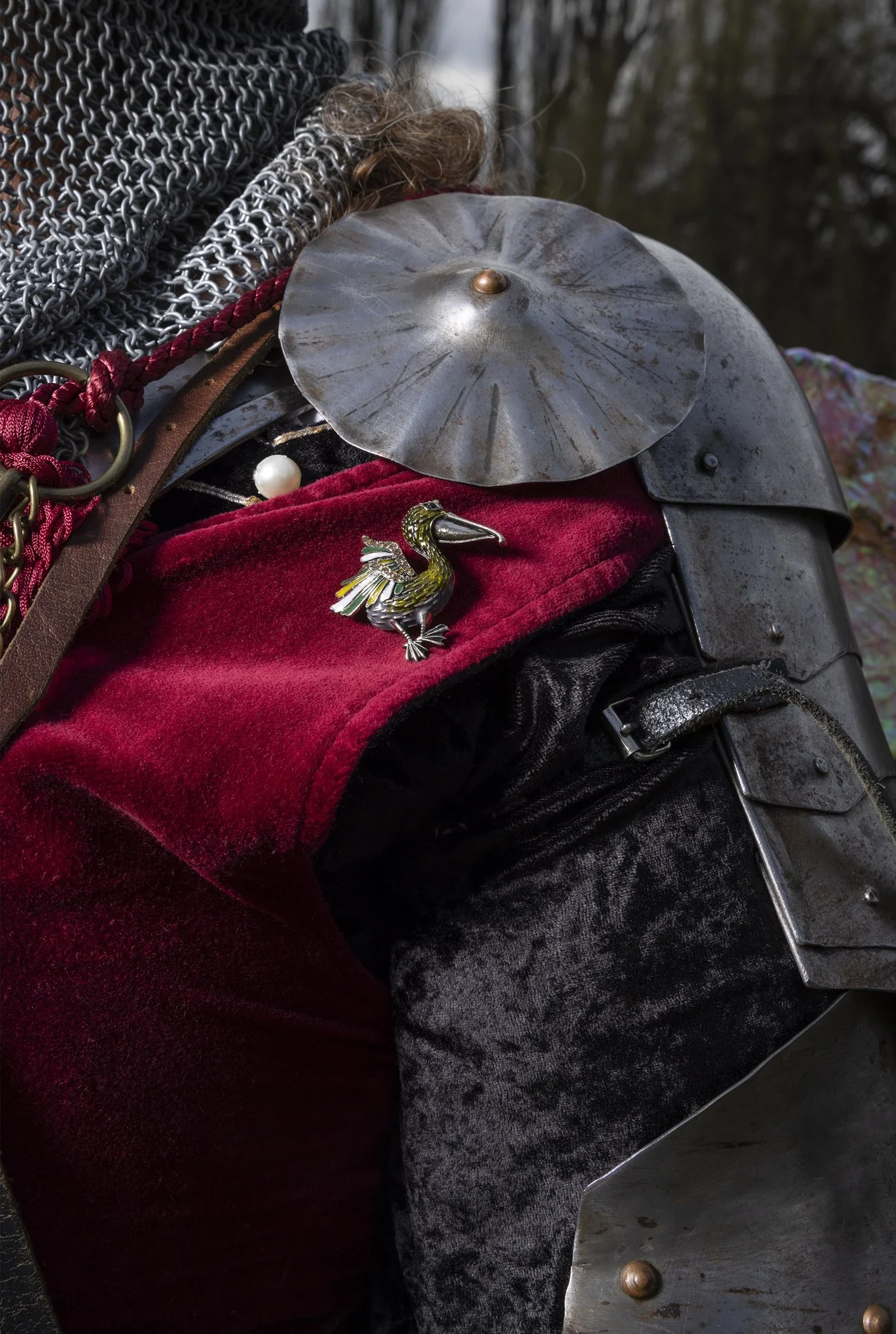
A small pelican brooch represents a popular local pub, The Pelican (known as ‘The Peli’) on St Mary’s Street. This is an important meeting place for Westgate Street residents, with local stories connecting the pub to Sir Francis Drake. Portraits of Queen Elizabeth I also sometimes contained pelican symbols, representing both strength and maternal love.
Katrina stands next to the boating lake in Westgate Park, close to both the River Severn and Alney Island wetland nature reserve. A place of fun and recreation for Gloucester’s residents since Victorian times, this is one of Katrina’s favourite spots to rest and be close to nature. Its presence in the photo shows both her own love of the water and the importance of waterways in Gloucester’s history.
For centuries, Westgate Street was a main entry route for trade from the River Severn, and its buildings reflect this rich history, from post-war flats to Tudor merchant shops to the Roman street below. You can find out more about the street’s secret history in this short film created for Gloucester History Festival.
“Dreams, strength, kindness, and the currents that connect us - this is a portrait of community on Westgate Street.”
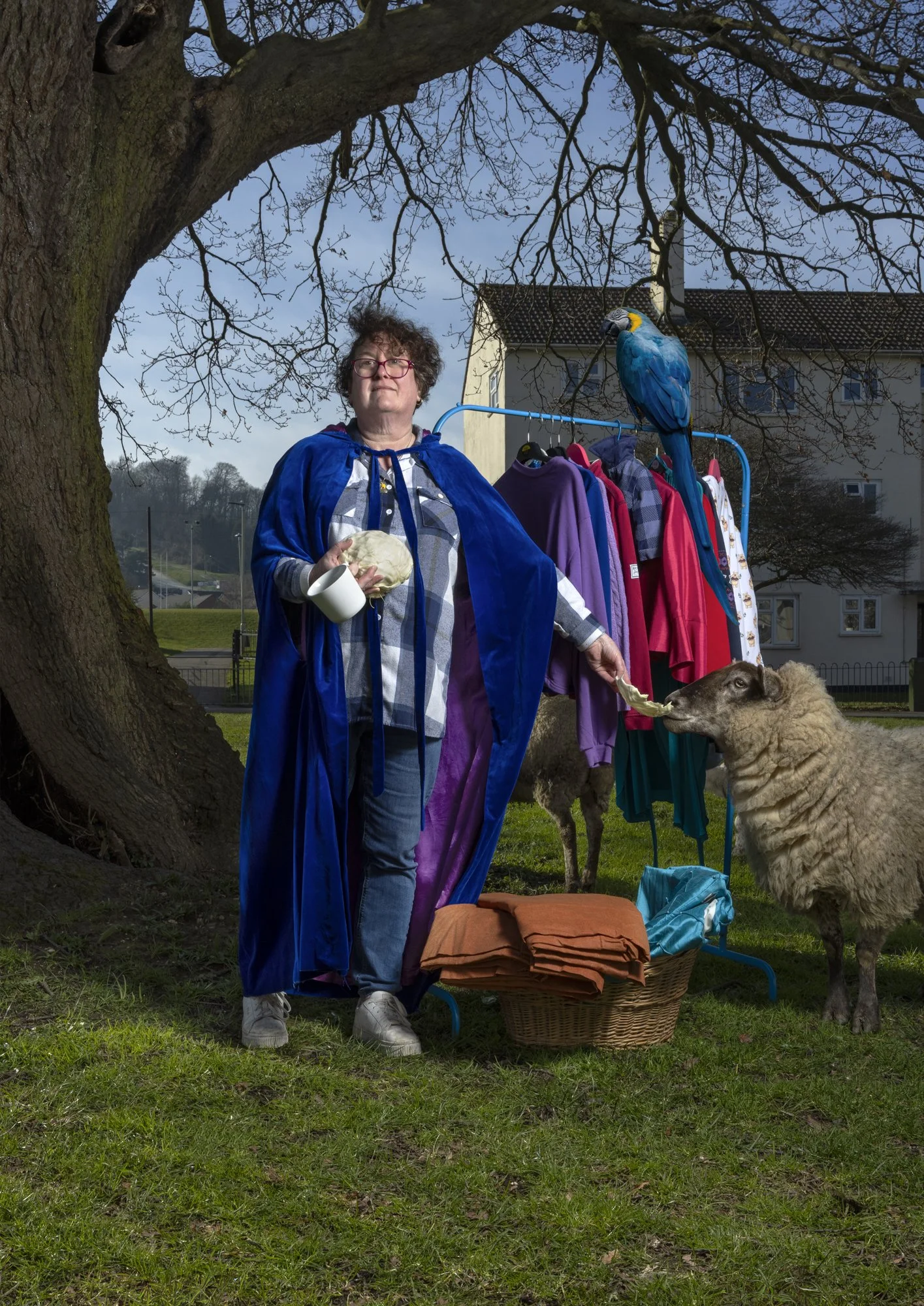
Emma Wilson
Founder of the Welcome Table, Matson, Gloucester
Photographed under the ‘Matson Oak’
“We really wanted to include the sheep in this picture - but they operate under their own rules so we weren’t sure if we would be lucky enough. We visited the farmer’s house to ask if we could use them in the shoot, but ended up helping his mum herd some rogue sheep out of her garden! On the day, they turned up at just the right moment, and we had to shoot quickly before they wandered away.”
Emma Wilson is a community worker who managed the Welcome Table Cafe at St Hilda’s Church Hall in Matson, Gloucester.
Open between 2019 and 2025, it provided a warm, friendly space for residents, as well as food, clothes, and children’s toys.
In the picture, Emma shows the collective strength of the people behind the Welcome Table Cafe - she is carrying a cabbage donated that morning by the charity Fareshares, for use in the kitchen, and a cup of tea - one of thousands drunk in the cafe by people coming together for a chat and a cuppa.
A mix of old and new, traditional and forward-looking, Matson is known for its post-war housing, built by Gloucester Council between the 1950s and 1970s around the existing village and the common land of Sneedhams Green. The close-knit community in Matson still has some of England’s most ancient grazing rights, and the local sheep still roam free among the houses and shops. They are much loved by residents and a distinctive part of Matson’s identity.
Emma stands beneath an oak tree that sits at the heart of the Matson estate. A local story claims that it was planted to mark the procession of the body of Edward II to Gloucester Cathedral in 1327. There is no evidence to support this, but the tree is very old, and in England, the oak is rich with religious and cultural significance, often symbolising strength and steadfastness.
Matson sits at the foot of Robinswood Hill, and an artificial ski slope was built there in 1974. It is most famously where ‘Eddie the Eagle' trained in the 1980s, and you can see the ski slope in the background of this image.
“Care, community, and common ground - this is a portrait of Matson.”
It’s said that iron ore was mined on this hill before the Romans, and a largely forgotten ‘holy well’ at the foot of the slope is fed by a ferruginous spring (containing iron oxides), and lends its name to nearby Redwell Road. Some people say it was once known as ‘Edith’s Spring’, and was created by the widow of a Saxon noble. After he died in the Battle of Hastings, she dug a hole in the bottom of the hill, intending for it to be her grave. But when it filled with red water, she decided instead to devote her life to God and lived nearby as a nun. There is no evidence for this either, but it makes for a good story!
The clothes rail in the image is taken from the Welcome Table Cafe, and it holds donations from the community. It also represents local stories of cloth and clothing being left by the well in exchange for the healing properties of its waters, particularly for eye conditions.
Emma herself wears a blue cloak, representing both the robes of St Hilda, who gives her name to the hall that housed the Welcome Table, and the ‘blue lady’, who is said to haunt a lane near St Katherine’s Church. Perhaps she is Lady Edith. Or maybe a more recent resident of nearby Matson House, home to the Selwyn Family from the 17th century, who also had strong connections to Richmond. This house was once a temporary residence for King Charles I and his two sons during the Civil War.
The parrot you can see here is a reference to a local bird called Mack, who has roamed freely around the estate for many years. It also hints at Matson’s global, colonial connections with Jamaica in the early 1700s, through William Selwyn of Matson House.
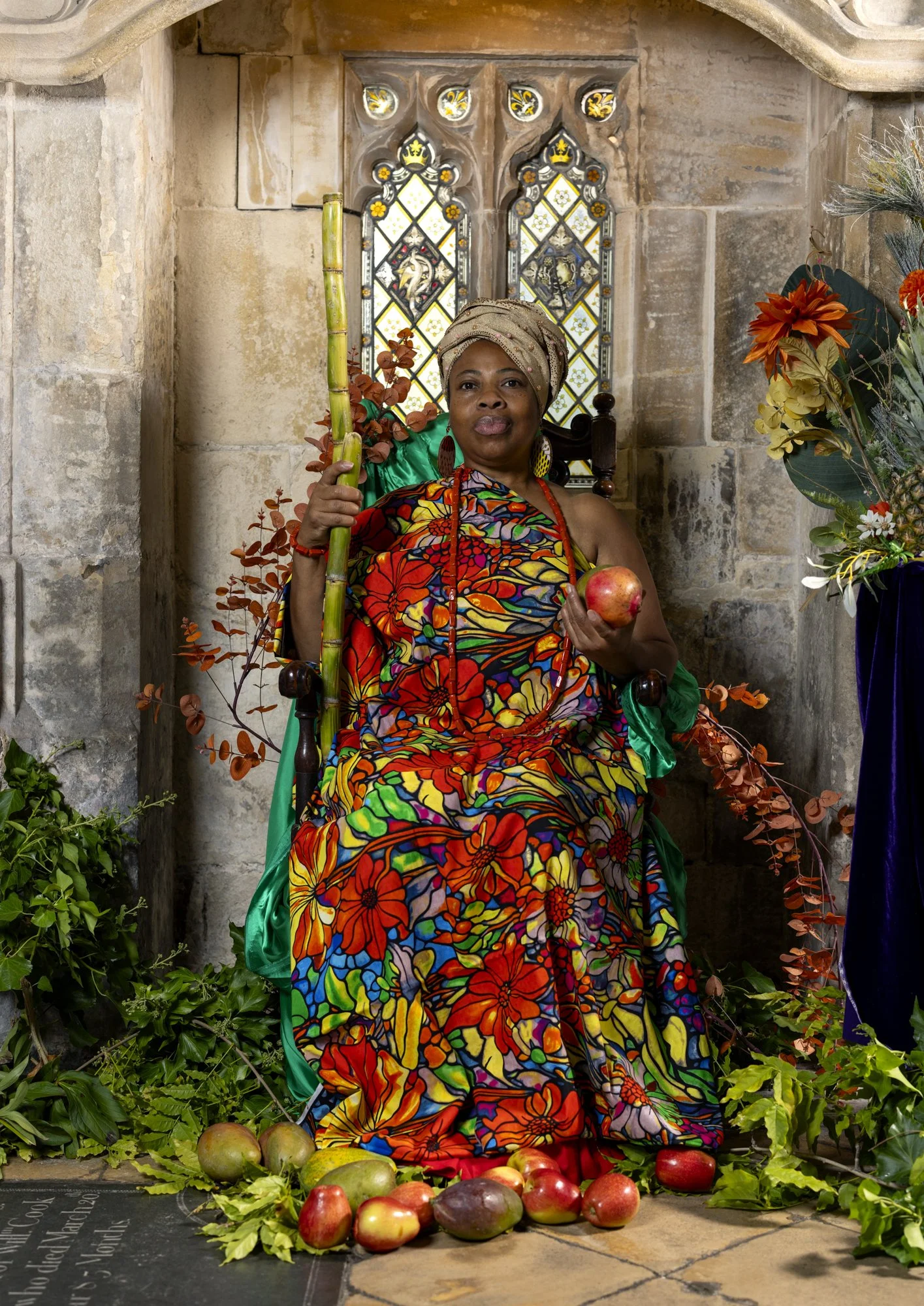
“Whatever our background, wherever we’re from — in Gloucester, it’s the water that connects us.”
VALERIE SIMMS
City Councillor for Moreland District, Gloucester, Director of Arts Diverse-City CIC, founder and trustee of OpenDoors 4U, an organisation advocating for young people with additional learning needs.
Photographed in Gloucester Cathedral
Born in Gloucester and raised in Matson before moving to Chequers as a young adult, Valerie Simms is deeply rooted in her local community.
In this portrait, Valerie reflects on home, belonging, and connection across time and place.
Much of her working life has been dedicated to creating spaces that celebrate Black culture, fashion and wearable art - and to honouring Gloucester’s shared heritage and diverse voices.
Most recently, in 2025 she supported Gloucester’s Windrush Day celebration event, Changes in Waves: Belonging, Being and Becoming, held at Gloucester’s Waterways Museum.
In this portrait, Valerie reflects on home, belonging, and connection across time and place.
In researching for this project, we chose to look further back in time, focusing on the historical record of Gloucester’s Black history from it’s earliest days as a Roman town, nearly 2,000 years ago.
From the late Bronze Age to Medieval times, there is evidence of people with African heritage living right across Britain, and finds from Romano-British cemeteries suggest that at that time, immigrant communities formed a significant part of the population.
As recent excavations in Gloucester have shown, the food, clothing, religious beliefs and ethnicity of the city’s population at this time reflected it’s connectedness with the rest of the world, and it’s status as an important river port.
The Gloucestershire Archives offers a handlist of records relating to Black, Asian and minority and ethnic people and communities in Gloucestershire that is accessible via their website.
The documentary evidence from the 1600’s onwards provides us with snapshots of the lives of Black residents across Gloucestershire over the centuries. From free women to lawyers apprentices to servants to musicians, the county continued to be a place of social and ethnic diversity.
The archives also provide us with evidence of the links between some of Gloucester’s landowners, and the wealth accumulated from their estates in the West Indies, and trade which relied upon the labour of enslaved people. The records document their visits to these estates, their political connections in England, and their attitudes to slavery.
“We’re intertwined — like the limbs and the vines in the photos — because we’re bound together in our history and heritage.”
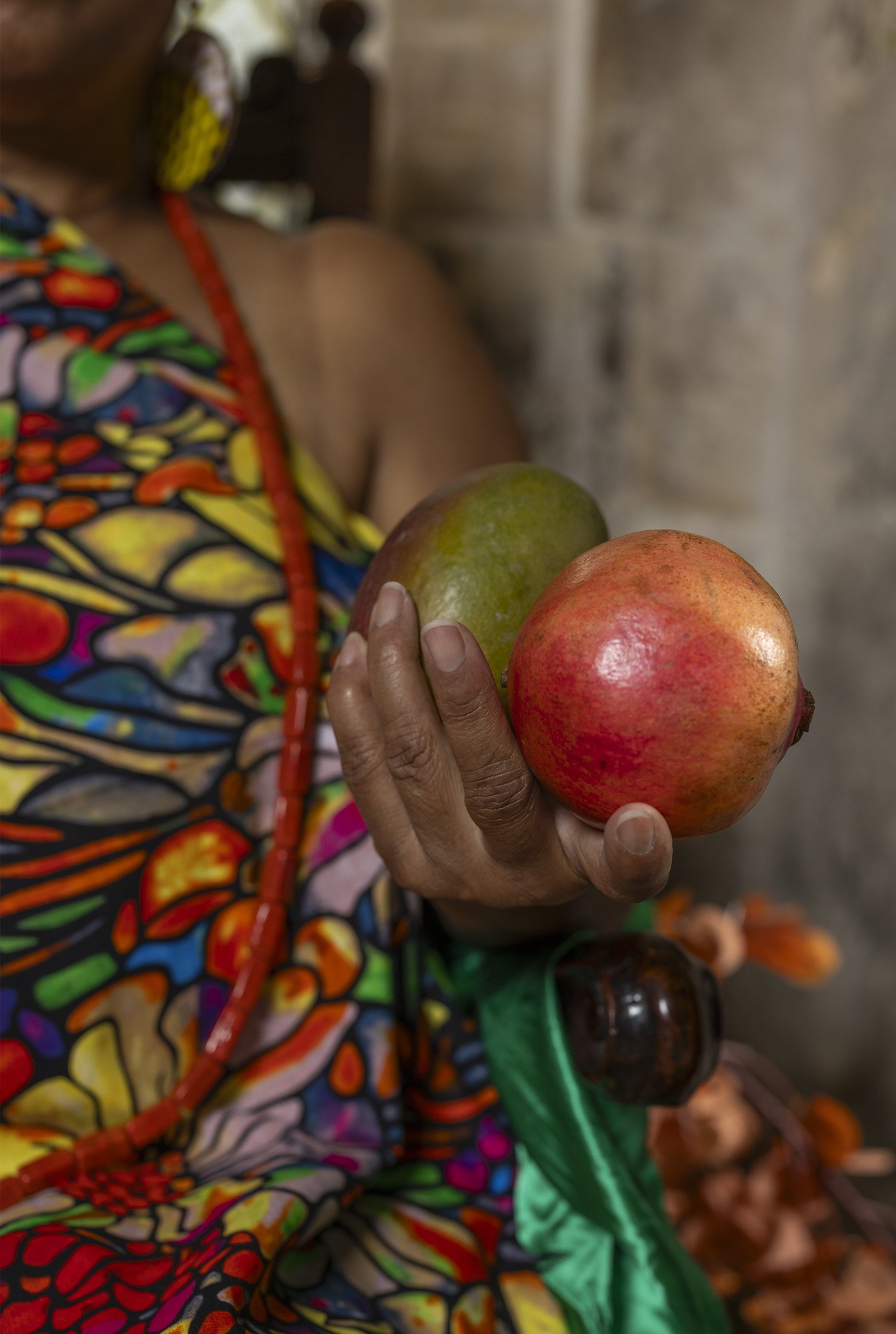
In the portrait, Valerie’s clothing draws on Jamaican and West African heritage, echoing Gloucester’s long links to global exchange. The bright colours represent both her own creativity, and that of communities in Gloucester, both past and present. The design and the plants around her connect us with the flora of both the UK and the West Indies, and a sense of our human connectedness through nature.
Her feet are surrounded by fruit - English applies from Gloucestershire, and mangos, papaya and pomegranates from the Caribbean, reflecting the mingling of food and cultural traditions in Gloucester over millennia.
In one hand Valerie holds a pomegranate. In many cultures this is a symbol of fertility, growth and prosperity, as well of belonging and home. In English royal tradition, this was also the symbol of Catherine of Aragon, Henry VIII’s first wife.
In the other hand, she holds a sugar cane, and is seated on an antique chair belonging to Gloucester Cathedral. She is surrounded by the Cathedral’s medieval stone arches and stained glass windows depicting biblical stories and English legends.
Her final pose, on a throne and holding an orb and sceptre, references both portraits of English medieval monarchs (for whom Gloucester Cathedral was an important centre of power), and the medieval kingdoms of West Africa.
Seated here in the heart of Gloucester’s political, religious and cultural life, Valerie celebrates her sense of place within the community’s living history.
“Roots, rivers, and resilience: this portrait celebrates Gloucester’s enduring global connections and the strength found in belonging.”